Journal · 31 August 2026

Stunts in hospitality

What's the real price of cheap?

Originally published in Misset Horeca

Lees dit in het Nederlands →

Amsterdam is in the middle of a new race: who can serve the cheapest dinner. Pop-ups that open for a single evening, charging a few euros a course. Budget concepts opening a second location within the year because the queue never stops. Het Parool now reviews a dinner under fifty euros every few weeks. People are clearly hungry for these places.

And understandably so. Who wouldn't be, now that everything has got more expensive and eating out feels like a luxury for so many? Except we all know we'll pay for it down the road.

Stay to the end, by the way: after the few Amsterdam places that get this right, there is a bit of good news about one of us.
In hospitality, cheap is just cheap

With some of these initiatives, the low price turned out not to be the whole story, but a way to draw attention to a product launch. With others, the question runs deeper, and you hear it more often now: how much quality, animal welfare and fair sourcing can you still guarantee at a price that sits permanently below the average restaurant's cost price? One budget concept grew into a second location within a few months, while the question of whether that comes at the expense of what's on the plate stays unanswered. And for the restaurants that do invest in fair sourcing and fair prices, competing becomes almost impossible.

We say these things matter to us. Just, apparently, not when it comes to price. In the supermarket, the plant-based option is now often already cheaper than the animal-based one, and since 2020 more and more people give price as their reason for eating less meat. Climate and wallet no longer point in opposite directions. In hospitality, that link doesn't exist. There, cheap is just cheap.

Hospitality lacks transparency

That points to something structurally missing in hospitality: transparency. Turn a product over in a supermarket and you know where it comes from and what is in it. That information is standardised and verifiable. Order a dish billed as local or seasonal, and comparable information is usually absent. Not because most restaurants aren't doing anything, but because there is no shared structure for it. From September 2026 one thing changes: under the EmpCo directive, environmental claims will need to be backed by evidence, in hospitality too.

The illusion that food can keep getting cheaper

For the guest, it stays a guessing game what a price actually covers. That makes silence tempting: claim nothing and you have nothing to prove. But people no longer buy that. What's left is a false picture. It isn't really cheap food that exists, so much as the hype around it.

That's the crux of it. It isn't that people want a tenner meal now and then. I find that completely reasonable, and I don't begrudge anyone it. But every initiative that markets itself as cheap without showing what sits behind the price feeds the idea that food can fall in price indefinitely, as long as you are creative enough. That isn't a comparison, it's a contest between budget and value. We already know how that ends from other sectors: budget fashion, budget airlines. Anyone going along with it without asking what it costs already knows the bill turns up somewhere else.

Affordable, and happy to show you why

The other side of the race: Amsterdam places that keep the bill friendly and can still tell you where the food comes from.

The column's point, made concrete: a fair price and an honest kitchen are not opposites. Three from the list.

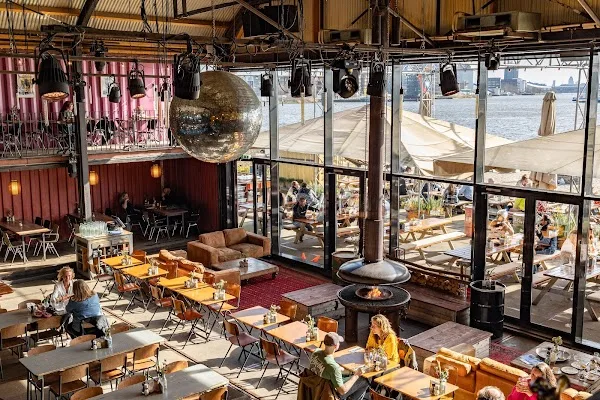
Pllek

Pllek

Amsterdam

A waterfront restaurant on the NDSM wharf, built from repurposed shipping containers, that grows some of its own vegetables, changes the menu with the season, and keeps most of it vegetarian or vegan.

Local sourcingSeasonalLow wastePlant-forward
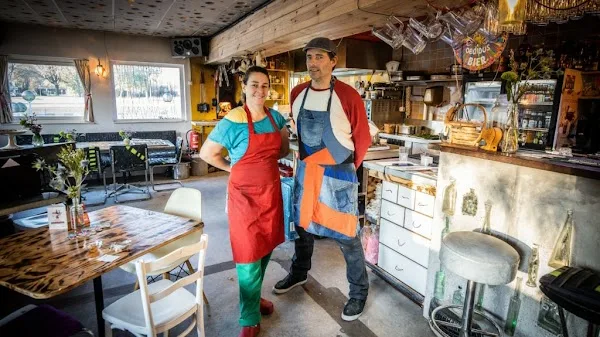
Restaurant Elixer

Restaurant Elixer

Amsterdam

A weekly surprise menu built from its own food garden and neighbouring plots, entirely vegetarian at the base with meat or fish only as an optional extra, and leftovers composted, fermented or canned rather than binned.

Local sourcingSeasonalLow wasteSocial impact
CousCous Club

CousCous Club

Amsterdam

A De Pijp kitchen with its own greenhouse for herbs and vegetables, groceries from the Albert Cuyp market around the corner, and a stove that steams rather than fries.

Local sourcingLow wasteSocial impact

See the full list

Thijs made the Food100 list

Speaking of walking the talk: our co-founder Thijs Koster has earned a place on this year's Food100, the list of 100 gamechangers working on a better food system, chosen by an independent jury. It recognises entrepreneurs driving the shift towards conscious dining and a more regenerative food system, the same mission behind My Treats, and exactly the kind of work Food100 exists to put forward.

Thijs Koster
Co-founder, My Treats

We don't advertise restaurants. We research how they source, cook and care, and show you what we find.

Browse the Food Identity database · See the SEERO method