Journal · 31 May 2026

Transparency is what hospitality needs

Guests rarely push back on knowing where their food came from.

This column first appeared in Dutch in Misset Horeca. Our co-founder Thijs Koster writes about what he learned running his own restaurants.

Restaurants frequently lack the precise information guests need to make conscious choices. The reliable data simply is not there. This is not because guests are uninterested, but because the information does not exist in the first place.
Hospitality is more than experience design

At my restaurant, Restaurant Vanderveen, we found that transparency rarely met with resistance. The opposite, in fact: guests appreciated it when the choices behind a dish, and where the ingredients came from, became part of the conversation.

In a supermarket, customers can see exactly where a product comes from, whether it is organic, what its nutritional value is and how long it keeps. That information is simply there. Openly, honestly and verified. People increasingly want that same clarity about what they eat and drink, for reasons that vary: health, diet, culture and, more often now, climate. Price still comes first for most.

The exhausted concept of experience

A Dutch podcast recently asked guests whether they think about animal welfare or the provenance of ingredients when eating out. Some visibly struggled with the trade off between price and welfare. Others consciously decided to make an exception for one evening. Some simply wanted a good night out without the moral arithmetic.

Dining out is strongly tied to feeling. We have tried to translate that into the by now exhausted concept of beleving, experience. At the moment that translation is mostly visible in the interior: open fire, photogenic plates, and programming designed to deliver a predetermined frame.

Transparency is hospitable

Or, as Marco Pierre White put it recently, something closer to a conveyor belt, engineered to deliver the standardised experience, because that is what people come for. No feeling, no emotion, no connection. Standardised menus of many small courses, with little room left for anything unexpected.

Feeling and emotion do not come from the surface level confirmation of expectations. They come from a genuine connection between maker and guest. Transparency keeps that connection honest. And perhaps that is precisely what hospitality needs to be about again.

Five kitchens that show their sourcing

Restaurants that let you see where what you are eating comes from.

Restaurant De Kas

Restaurant De Kas

Amsterdam

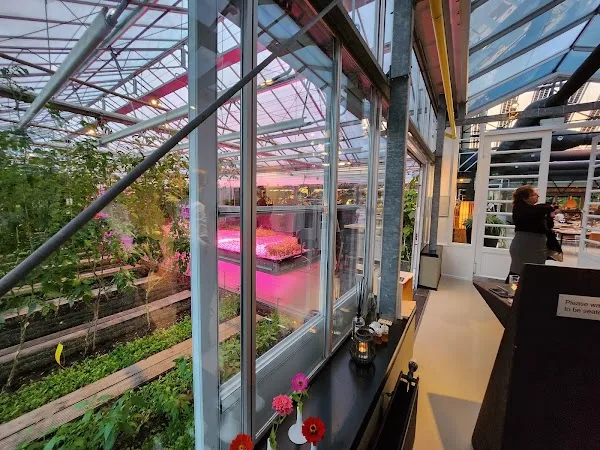
Vegetables and herbs harvested daily from its own gardens in Amsterdam and Beemster, then served in the greenhouse they grew in.

Local sourcingSeasonalLow wasteResponsible meat & fish
Restaurant Vermeer

Restaurant Vermeer

Amsterdam

French precision applied to the Dutch landscape, in a surprise tasting format shaped by whatever the season gives.

Local sourcingSeasonalLow wasteResponsible meat & fish
Bolenius Rembrandtpark

Bolenius Rembrandtpark

Amsterdam

Vegetables from their own garden sit at the centre of every dish, with a full plant menu available alongside.

Local sourcingSeasonalLow wasteResponsible meat & fish
Heimat

Heimat

Utrecht

Nordic technique applied to Dutch ingredients, with chefs presenting each dish and naming the producer behind it.

Local sourcingSeasonalLow wastePlant-forward
Héron Petit Restaurant

Héron Petit Restaurant

Utrecht

Works directly with the farmer, gardener, livestock farmer, cheesemaker and fisherman, with no intermediaries in between.

Local sourcingSeasonalLow wasteResponsible meat & fish

Browse every reviewed restaurant

Thijs Koster
Co-founder, My Treats

We don't advertise restaurants. We research how they source, cook and care, and show you what we find.

Browse the Food Identity database · See the SEERO method