Walking through the Frisian farmland around Ternaard, I sigh once again over the lasting divide between producer and consumer. Between countryside and city.
This column first appeared in Dutch in Misset Horeca.
What a potato vending machine in Friesland shows the hospitality sector.
Walking through the Frisian farmland around Ternaard, I sigh once again over the lasting divide between producer and consumer. Between countryside and city.
This column first appeared in Dutch in Misset Horeca.
A little shop on a farmyard, by the road, with a 'potato vending machine' that gives access to local produce in the style of the large Dutch fast-food chain FEBO and its famous wall of hatches, shows in turn how an urban idea can be carried out in the countryside. And it offers me, as a city dweller, an almost familiar way of shopping that I understand immediately. I make eager use of it and, for a fraction of the city price, buy a week's worth of vegetables. Several varieties of (home-grown) potatoes, organic dairy, eggs, assorted vegetables, jams and taster packs. All behind their own little door that opens automatically once you have paid for your basket.
A potato farmer a little further on proudly shows me that they grow for Albert Heijn, the largest supermarket chain in the Netherlands. I assume that, on the one hand, they give up a fair share of their margin and, on the other, can count on a nice, steady turnover. I wonder how he was approached during the recent systems breach. Did he suddenly have to deliver more because 'the city' was in trouble? Did the pressure of higher volumes and uncertain delivery times cost him margin?
What stands out is that, out here in the countryside, that divide doesn't really exist. The idea that economic, political and creative power is exercised in an urban setting is turning out, more and more, to be only half the truth. At no point along the way do I see upside-down flags, the symbol of Dutch farmers' discontent. The farmers' protests move to the city, where the rules are made and the consumer decides which potato or cucumber wins. The power of production, however, lies here. And political power also turns out to be greater than assumed, if you look at various elections of recent years. The polls were regularly off. The rural population was almost systematically underestimated. As a society, we have kept looking to the city too much, politically and economically, as the deciding force. Is that a thing of the past?
Restaurants are, above all, the place where farmer and guest can meet. And that short value chain to the farmer is closer than you might think. A number of wholesalers have now made locality one of their primary pillars, with products from their own region and the farmer behind them in the picture. So the kitchen can come to the farmer without having to walk through Friesland itself. Only the guest sees little of it. In the supermarket, the origin is on the label; by the roadside, it sits behind a little door. In the restaurant, it usually remains an arrangement between supplier and chef in the not-so-open-after-all kitchen.
That our food system is vulnerable no longer needs explaining to anyone after the recent cyberattack. How long we let the chain become is a choice we make as a society, at the shelf, on the menu and even in the voting booth. Hospitality makes that choice every day when it buys. The potato vending machine near Ternaard shows it. Behind every little door lies the answer to the question of where our food comes from and who makes it.
From the Ekomenu community: restaurants that can name the farm, grow their own, or shop a short chain.
That shut door is the one My Treats sets out to open. We check how a restaurant sources, cooks and cares, and we write down what we find, so the arrangement between a chef and the farmers becomes something you can read before you book.
Four Dutch restaurants that can already tell you where it comes from.
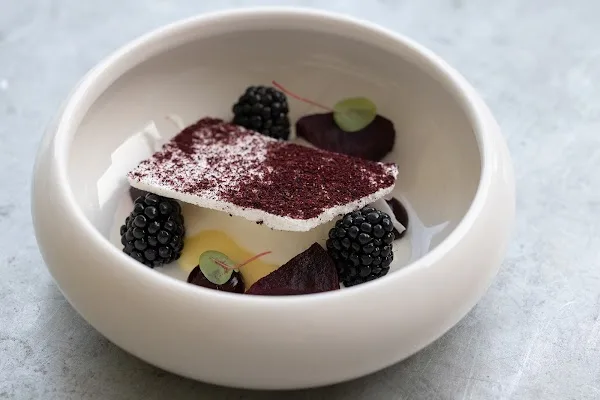
Eastermar
On a two hectare Frisian estate the kitchen garden and the De Iest food forest grow the vegetables, herbs and fruit, Frisian Angus comes from butcher Van Huisstede in Dronrijp, and the fish is landed by Iel en Mear from Frisian waters, a twenty year partnership.
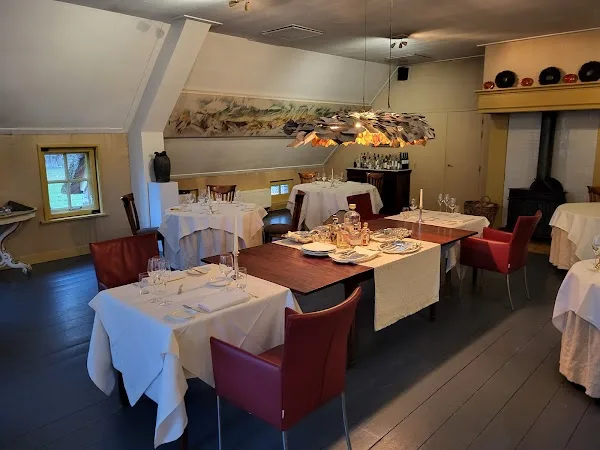
Den Ham
Sixteen named producers on a published suppliers page, and a chef who shops the region twice a week, so nearly everything on the plate comes from nearby.
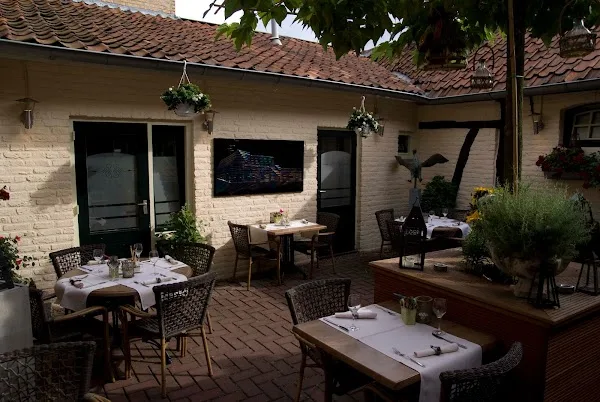
Schinnen
Named Limburg suppliers across every category, from De Waog vegetables to Kuusj nose to tail pork and heritage breed cattle, with Michelin crediting the short chains chef Jean Thoma builds.
Zenderen
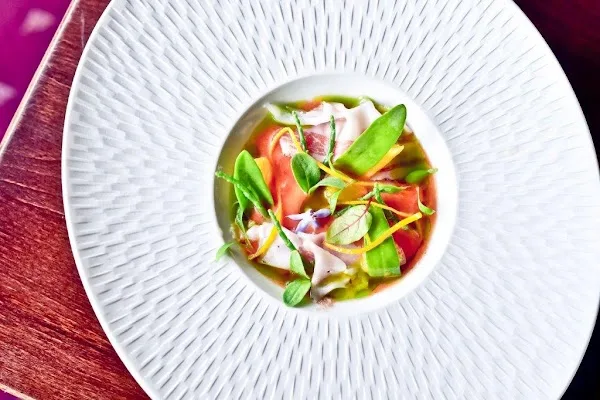
The restaurant's own farm and gardens feed the table, with named heritage breeds, an on site dairy turning milk into cheese, coffee roasted and beer brewed in house and the rest sourced within fifteen kilometres, which Michelin sums up as farm to fork.
Thijs Koster
Co-founder, My Treats
We don't advertise restaurants. We research how they source, cook and care, and show you what we find.